

Sorted by date Results 126 - 150 of 376
Alaska lawmakers are making fast work of several fish bills that have wide support from Alaska’s fishermen. “I was anticipating a somewhat slow start, but they’re organized and they’re diving right into these issues and taking these bills up. And so there’s lots of opportunities to participate,” said Frances Leach, executive director of United Fishermen of Alaska. The bill (HB 35) that would resolve a conflict of interest fix at the state Board of Fisheries has been moving through committee hearings in Juneau and could finally be settled aft...
It’s been a long time coming but payments should soon be in hand for Alaska fishermen, processors and coastal communities hurt by the 2016 pink salmon run failure, the worst in 40 years. The funds are earmarked for Kodiak, Prince William Sound, Chignik, Lower Cook Inlet, South Alaska Peninsula, Southeast Alaska and Yakutat. Congress ok’d over $56 million in federal relief in 2017, but the authorization to cut the money loose languished on NOAA desks in DC for over two years. The payouts got delayed again last October when salmon permit hol...

Alaskans saw salmon die offs last summer across the state when water temperatures soared into the mid-70s to above 80 degrees in some regions. But what about threats to salmon from the accompanying global gorilla - increased acidity? It’s a shock to learn that while extensive studies for years have been underway by Alaska scientists on impacts to major fish and shellfish stocks, there’s been none done in Alaska for salmon. In fact, only two lab studies have been done on Alaska salmon, both out o...
Every year since 1991 Fish Factor has selected “picks and pans” for Alaska’s seafood industry - a no-holds-barred look back at some of the year’s best and worst fishing highlights, and my choice for the biggest fish story of the year. Here are the 2019 picks and pans, in no particular order - Best fish scientist – Dr. Bob Foy, director of science and research at NOAA’s Alaska Fisheries Science Center/Juneau – No one explains science better or with more passion. Biggest new business potential: Mariculture. Alaska is acting on plans to grow a $10...
Alaska’s seafood industry will be “open for business” starting January 1 when some of the biggest fisheries get underway long before the start of the first salmon runs in mid-May. Cod will begin it all in the Bering Sea, which has a 305.5 million pound catch quota, down about a million pounds from 2019. Less than 6 million pounds of codfish will come out of the Gulf. A 400,000 Tanner crab fishery at Kodiak starting on January 15 will be helpful to a town whose economic bottom line will be badly battered by the Gulf cod crash. But it will be th...
They say good things come in small packages and that’s the case for Alaska cod fishermen heading into the new year. A small cod fishery will occur in Gulf state waters (out to three miles) for 2020, putting to rest speculation that no cod would be coming out of the Gulf next year. A catch quota of about 5.6 million pounds, down from 10.2 million pounds, will be split among five regions: Prince William Sound, Cook Inlet, Kodiak, Chignik and the South Alaska Peninsula, with limitations on gear and staggered openers. That will be a relief to thous...
Lower catches for Pacific halibut are in the forecast for the foreseeable future. That was the message from the International Pacific Halibut Commission at its meeting last week in Seattle. The IPHC oversees halibut stock research and sets catch limits for nine fishing regions ranging from Northern California and British Columbia to the Bering Sea. There are fewer of the prized flatfish (down 4%), they weigh less (down 5%) and no big pulses appear to be coming into the stock was the grim and the results of summer long surveys at nearly 1,370...
The value of Alaska salmon permits has ticked upwards in regions that experienced a good fishery this year while others have tanked. Not surprisingly, the record sockeye fishery at Bristol Bay has boosted sales of driftnet permits to nearly $200,000, up from the mid-$170,000 range prior to the 2019 season. Another strong run forecast of 48.9 million sockeyes for 2020 with a projected harvest of 36.9 million could increase the value even more, said Doug Bowen of Alaska Boats and Permits in Homer. What’s really raising eyebrows, Bowen said, is v...
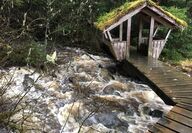
The heavy rainfall this month has been pushing precipitation levels closer to the normal 109.23 inches of rain that normally falls in Petersburg each year, according to Wes Adkins, a meteorologist with the National Weather Service in Juneau. The total amount of rainfall this year in Petersburg is at 82.30 inches, as of Nov. 15. Over the weekend, precipitation levels surpassed the normal 12.22 inches for the month of November. The Climate Prediction Center forecasts a tilt towards higher than...
Alaska’s 2019 salmon season was worth $657.6 million to fishermen, a 10% increase from the 2018 fishery. Sockeye salmon accounted for nearly 64% of the total value, topping $421 million, and 27% of the harvest at 55.2 million fish. Those are the lead takeaways in a summary from the Alaska Department of Fish and Game that reveals preliminary estimates of salmon harvests and values by region. The final values will be determined in 2020 after processors, buyers, and direct marketers submit their totals paid to fishermen. Pink salmon were the s...
ANCHORAGE, Alaska (AP) — Nearly $150 million was spent on mineral exploration for primarily large mine opportunities in Alaska last year, officials said. That figure is up from just more than $50 million in spending three and four years ago, The Alaska Journal of Commerce reported Wednesday. Mineral exploration spending reached a peak of $350 million per year in the late 2000s, according to the Alaska Department of Natural Resources. There were 18 large exploration projects across the state for “every metal under the sun,” said Curt Freem...
The federal government’s plan to raze more roads through the Tongass National Forest is facing strong headwinds from fishermen, Native groups and coastal communities throughout Southeast Alaska. Over 220 Southeast Alaskan fishermen signed a letter to the Trump Administration last week opposing the abrupt push to exempt the Tongass National Forest from a roadless rule in place for over a decade. The exemption would release more than 9 million acres from protection and open nearly 200,000 acres to logging. The U.S. Forest Service made the a...
Rainforests under siege To the Editor: The Doomsday Clock of the Bulletin of Atomic Scientists notes it’s 2 minutes to midnight. They list the unfolding climate catastrophe to be just as much an existential threat as that of nuclear war. A nuclear war can start with one push of a button. But our unfolding climate catastrophe started long ago with daily acts of denial by our elected officials in the service of extractivism — rather than the public interest. Regardless of whether it is raining outside, Southeast Alaska has been facing “se...
Hundreds of fishery stakeholders and scientists will gather in Anchorage next week as the state Board of Fisheries (BOF) begins its annual meeting cycle with a two-day work session. The seven-member BOF sets the rules for the state’s subsistence, commercial, sport and personal use fisheries. It meets four to six times each year in various communities on a three-year rotation; this year the focus is on Kodiak and Cook Inlet. The fish board and the public also will learn the latest on how a changing climate and off kilter ocean chemistry are a...
Halibut catches fluctuate based on the ups and downs of the stock from California to the farthest reaches of the Bering Sea. If the numbers decline, so do the catches of commercial and sport fishermen. But similar reductions don’t apply to the boats taking millions of pounds of halibut as bycatch in other fisheries. In the Bering Sea, for example, there is a fixed cap totaling 7.73 million pounds of halibut allowed to be taken as by catch for trawlers, longliners and pot boats targeting groundfish, with most going to trawlers. The cap stays t...
The nation’s farmers of the sea are hoping for a helping hand from Uncle Sam to train future generations of fishermen. It would mirror programs in place for nearly 160 years for U.S. farmers and ranchers. Federal backing of training programs for entry level farmers and ranchers can be traced back to the 1862 Morrill Land-Grants Act. Beginning in 2009, Congress authorized $75 million for the Beginning Farmer and Rancher Development Program (BFRDP) to “develop and offer education, training, outreach and mentoring programs to enhance the sus...
Investment that comes from within, not from without, is the motivation behind a boot camp that will jump start and nurture businesses in communities throughout Bristol Bay. Through September 15 locals with good ideas, start-ups or existing businesses across the region will compete to attend a three day boot camp that provides in-depth business education, networking and advice. First, they must make the grade in a simple application process. The 10 or 12 who make that cut will go to the boot camp and be judged on business feasibility and...
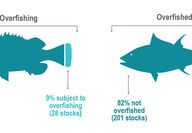
The National Oceanic and Atmospheric Administration held an online press conference last Friday, Aug. 2, to announce the release of their annual report to Congress on the state of the country's fisheries. This report, for the year 2018, looks at 479 federally managed fish stocks across the United States. Alan Risenhoover, director of the office of sustainable fisheries, said that the report was designed to give Congressmen and the wider public more insight into the state of American fish stocks....
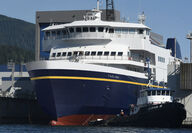
JUNEAU, Alaska (AP) - The first strike by Alaska ferry workers in over 40 years has snarled travel plans for thousands of people during the busy tourist and fishing season, leaving some stranded and catching the attention of a Democratic presidential candidate. Members of the Inlandboatmen's Union of the Pacific went on strike Wednesday after failing to reach agreement with the state on contract terms, bringing Alaska's ferry system to a halt. State transportation Commissioner John MacKinnon...

Juneau, Alaska (AP) - A spokesman for a union representing workers for the Alaska ferry system says the union has gone on strike. Hundreds of ferry workers went on strike Wednesday after failing to reach agreement on a contract with state negotiators. Robb Arnold, a spokesman for Alaska's Inlandboatmen's Union of the Pacific, said the strike began Wednesday afternoon after a meeting with state officials did not yield an agreement. He said the union remains open to a deal. "Unfortunately, we had...
Salmon dominates the summer fishing headlines but it’s among many other fisheries going on throughout the Gulf of Alaska and Bering Sea. Alaska’s salmon season has gotten off to a mixed start, with strong catches in some regions over the past month and dismal hauls in others. Good harvests have continued at the Copper River and more recently throughout Prince William Sound. That’s not been the case at Kodiak, Cook Inlet and Chignik where fishing is off to a very slow start. Trollers are targeting Chinook salmon in Southeast, and other salmo...
Bering Sea crabbers saw upticks in crab recruits during a good fishery for the 2018/2019 season, along with strong prices. The crab season opens in mid-October for red king crab, Tanners and snow crab (opilio), and while fishing goes fast for red kings in order to fill orders for year-end markets in Japan, the fleet typically drops pots for the other species in January. Crabbers said they saw strong showings of younger crab poised to enter the three fisheries. Only male crabs of a certain size are able to be retained for sale. “For Bristol Bay...
Nearly all Alaska salmon permits have gone up in value since last fall and buying/selling/trading action is brisk. “We’re as busy as we’ve ever been in the last 20 years,” said Doug Bowen of Alaska Boats and Permits in Homer. “Boat sales are doing well and between IFQs and permit sales, we’ve got a busy year going.” The salmon permit interest is fueled by a forecast this year of over 213 million fish, an 85 percent increase over 2018. Also, salmon prices are expected to be higher. For the bellwether drift permit at Bristol Bay, the value has in...
The Panhandle plans to be the next Alaska region to give new life to old fishing gear by sending it to plastic recycling centers. The tons of nets and lines piled up in local lots and landfills will become the raw material for soda bottles, cell phone cases, sunglasses, skateboards, swimsuits and more. Juneau, Haines, Petersburg and possibly Sitka have partnered with Net Your Problem to launch an effort this year to send old or derelict seine and gillnets to a recycler in Richmond, British Columbia. “We’re going to be working in a new loc...
Alaska fishermen could catch 85 percent more salmon this year (nearly a hundred million more) if state forecasts hold true. That’s good news for fishermen in many Gulf of Alaska regions who in 2018 suffered some of the worst catches in 50 years. The Alaska Dept. of Fish and Game is predicting a total salmon catch of 213.2 million fish for 2019, compared to about 116 million salmon last year. The increase comes from expectations of another big haul of sockeyes, increases in pinks and a possible record catch of chum salmon. The harvest b...