

Sorted by date Results 51 - 75 of 376

On September first Dr. Jennifer (Jen) Hyer will begin an eighteen month sabbatical from the Petersburg Medical Center to sail from San Diego to New Zealand with her family. When she and her husband, Chris Hyer, first started dating twenty-seven years ago, Chris gave Jen the book "Dove," about a boy who sailed around the world, and told her it was a dream of his. She was immediately on board and boats have been a constant in their lives ever since. Their first home together was a 30' Sundowner...
In a change of plans from just a few weeks ago, the Alaska Marine Highway System reports it lacks enough crew to operate the Kennicott this summer. The loss of the Kennicott from the schedule likely would mean dropping service to Prince Rupert, British Columbia, and the loss of two additional port calls in Petersburg each month, May through September. It also could jeopardize state ferry service to Yakutat on the cross-gulf route, and abandoning plans to run the Kennicott to Bellingham, Washington, once a month to help move the heavy load of su...
An ongoing shortage of crew is the “No. 1 risk factor” for the Alaska Marine Highway System, Transportation Department Deputy Commissioner Katherine Keith told legislators. As of a Feb. 2 presentation to the Senate Transportation Committee, the ferry system was short just over 100 crew for full staffing to efficiently operate the winter schedule, about a 20% vacancy factor for onboard employees. The ferry system, however, is able to run its schedule with crew members picking up extra shifts and overtime to cover the work, and with man...
After the heat wave-induced collapse of the Bering Sea snow crab fishery, some fishermen were looking, with hope, at the upcoming tanner crab harvest out of Kodiak. The nearly 6-million-pound quota was the highest in decades. And some people spent more than $100,000 to buy a permit to fish this year, said Kevin Abena, one of the leaders of the Kodiak Crab Alliance Cooperative. But fishermen’s hopes for a banner season are now in limbo, as the 130 boats in the Kodiak tanner crab fleet are on strike — holding out for higher prices from the sea... Full story
The federal ship has come in for the Alaska Marine Highway System, carrying more than $284 million for upgrades to old vessels, money to help pay for a new ferry, dock repairs, additional service to small communities and even a proposed electric-powered ferry for short runs. The Federal Transit Administration announced the awards last week. The grants were awarded under a competitive application process, but Alaska’s congressional delegation wrote the provisions of the Infrastructure Investment and Jobs Act of 2022 with the intent of s...
Washington, DC — U.S. Senators Lisa Murkowski and Dan Sullivan, both R-Alaska, announced Wednesday that the Federal Transit Administration is awarding more than $285 million of investments to improve the reliability and service of Alaska’s ferry system, which serves more than 30 communities across 3,500 miles of coastline. The funding, all awarded to the Alaska Marine Highway System, is designated to replacing an aging vessel, upgrading ferry dock infrastructure in rural communities, modernizing four vessels, procuring an electric ferry, des...
The state ferry Matanuska will not return to service from its winter overhaul as scheduled next month and will require millions of dollars more of steel replacement work if it is ever to get back to work. In its place, the Alaska Marine Highway System plans to put the Columbia back to sea after almost 30 months in layup status to save money. The loss of the Matanuska will mean more than a month without ferry service for Petersburg. The ship had been scheduled to resume sailings the first week of February to replace the Kennicott, which was...
The halibut charter boat fleet in Southeast and the Gulf of Alaska will be able to collectively buy quota shares from commercial fishermen under a provision in the federal omnibus budget bill passed at the end of December. The program would be funded by a fee charged for every angler aboard a halibut charter. Seward’s Andy Mezirow is on the North Pacific Fishery Management Council and has been a champion of the program for a while. He said it’s a long time coming. The program was vetoed by President Donald Trump in his final weeks in office and...
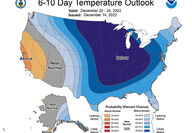
Petersburg is expected to be in for a cooler than normal winter as La Niña conditions return for an unusual third consecutive winter. The weather patterns in Southeast brought on by La Niña can be traced all the way back to trade winds off the Pacific coast of South America according to Rick Fritsch, a meteorologist with the National Weather Service in Juneau. Enhanced easterly trade winds coming off of the Pacific coast of South America blow the warmer water at the surface of the ocean w...
State and federal fishery managers are forecasting a commercial harvest of about 19 million pink salmon in 2023 in Southeast Alaska, which would be a “significant drop” from the parent-year harvest of 48.5 million pinks in 2021, according to this month’s announcement from the federal NOAA Fisheries and Alaska Department of Fish and Game. A 19-million fish harvest would be at the high end of the “weak” range (11 million to 19 million fish), according to the announcement, which added that a harvest of that size would be only about 39% of the av...
November 24, 1922 – Forced to turn out to sea for six days, with the engines running every minute without a stop, and one member of the crew kept a prisoner in the hold for twenty-four hours, the halibut fishing boat Sentinel was held in the storm that raged in the Gulf of Alaska last week according to Captain Louis Sunderland in command. Nearly all of the oil was used and not a fishing line was cast during the entire trip, Captain Sunderland said. The Sentinel weathered the storm safely and came into port for supplies before leaving again l...
September 29, 1922 – “Theoretically and scientifically and in accordance with official lore, the run of sockeyes up the Chilkat closed on the 15th of August and at that date the stream watchmen were withdrawn. The truth of the matter is that the run of sockeyes was only beginning when the watchmen were withdrawn and the result was that within three days after the watchmen were withdrawn, no less than twenty-seven purse seines, the first ever used off the Chilkat River, were fishing there most industriously and with marvelous success, with thr...

Three years after adopting a pricing plan that adds a surcharge for passenger, vehicle and stateroom fares on popular sailings, the Alaska Marine Highway System has decided to suspend the program for its fall/winter schedule. The ferry system's "dynamic pricing" added 5% to 50% to ticket prices, depending on the percentage of a ship's capacity already booked - similar to airlines raising prices as flights fill up. The Alaska Department of Transportation announced the decision last Friday to...
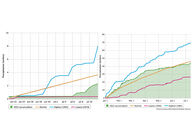
Petersburg has been hit with below average rainfall this summer according to data collected by the National Weather Service. From June 21 to July 6 Petersburg had just 0.42 inches of precipitation and though that has picked up this past week, the borough is still dealing with the challenges caused by the dry weather. According to Edward Liske, a meteorologist with the NWS in Juneau, the dry conditions have been observed across Southeast and are the product of a high pressure ridge. "Well the...
Western Alaska villagers have endured the worst chum salmon runs on record, several years of anemic Chinook salmon runs in the Yukon and Kuskokwim rivers, harvest closures from the Bering Sea coast to Canada’s Yukon Territory and such dire conditions that they relied on emergency shipments of salmon from elsewhere in Alaska just to have food to eat. Many of those suffering see one way to provide some quick relief: Large vessels trawling for pollock and other groundfish in the industrial-scale fisheries of the Bering Sea, they say, must stop i... Full story
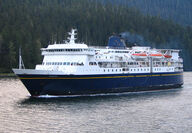
Global supply chain shortages and delays have extended past grocery stores, car dealers and electronics to the Alaska Marine Highway System. The state ferry Kennicott was delayed coming out of winter overhaul. Instead of returning to service last week, as had been scheduled, the ship left Ketchikan on Tuesday for a two-week trip to Juneau, Yakutat and then into the Gulf of Alaska before sailing into Bellingham, Washington, to fully start its summer runs. The Kennicott's scheduled return to servi...
With more than 260 would-be ferry passengers stuck on a waitlist for travel out of Bellingham, Washington, and sailings full until late July, the Alaska Marine Highway System has scheduled an extra run of the Matanuska to bring the people and their vehicles to the state. The additional sailing is scheduled to leave Bellingham on May 25. There was time in the ship’s schedule, which ferry management had been holding open in hopes the Matanuska could restart service that week to Prince Rupert, British Columbia, after being gone from the C...
The weekly write up about Alaska’s fishing industry began in 1991 in the Anchorage Daily News. Since then, subscribership has grown to nearly 20 news outlets across Alaska and nationally. The goal always has been to make readers aware of the seafood industry’s economic, social and cultural importance to all Alaskans. Just one extra penny per pound at the docks means millions of dollars more for state coffers! Commercial fishing puts more people to work than any other private industry in Alaska and provides two-thirds of the nation’s wild caugh...
Gotta give the Dunleavy Administration credit for being the first to try and get to the bottom of one of Alaska’s most troubling fishing issues: bycatch. The governor in November 2021 created an Alaska Bycatch Review Task Force (ABRT) “to help better understand unintended bycatch of high value fishery resources in State and federal waters.” He defined bycatch as “fish which are harvested in a fishery but are not sold or kept.” The 13-member group will issue a final report based on those better understandings in November 2022. “Once the structur...
March means more fishing boats are out on the water with the start of the Pacific halibut and sablefish (black cod) fisheries this past Sunday, followed by Alaska’s first big herring fishery at Sitka Sound. For halibut, the coastwide catch from waters ranging from the West Coast states to British Columbia to the far reaches of the Bering Sea was increased by 5.7% this year to 41.22 million pounds. Alaska always gets the lion’s share of the commercial halibut harvest, which for 2022 is 21.51 million pounds, a nearly 10% increase. Exp...
Frigid February fishing in Alaska features crabbing from the Panhandle to the Bering Sea, followed in March by halibut, black cod and herring. Southeast crabbers will drop pots for Tanners on Friday, and they’re expecting one of the best seasons ever. Fishery managers said they are seeing “historically high levels” of Tanners with good recruitment coming up from behind. The catch limit won’t be set until the fishery is underway but last year’s take was 1.27 million pounds (504,369 crabs), which weighed 2.5 pounds on average. Crabbers know they...
Where do most Alaska fishermen live? Which Alaska region is home to the most fishing boats? The answers are in an economic report by the Alaska Seafood Marketing Institute for 2019/2020 that includes all regions from Ketchikan to Kotzebue. Nearly 40% of Alaska’s more than 31,000 fishermen live in the Southcentral towns of Anchorage, Kenai, Cordova, Seward, Homer, Valdez and Whittier. They earn more than half of their paychecks from fisheries outside of the region, with the Bristol Bay driftnet fishery their main source of income. S...
Wow, there is a lot of fishing going on across Alaska! Salmon is the heart of Alaska’s seafood industry but winter is when the fishing action really begins. Hundreds of boats are out on the water on the first day of each new year, beginning a predictable rhythm for the seafood industry as millions of pounds of fish begin to cross the docks around the clock at Alaska’s working waterfronts. Here’s a sampler: Starting January 1 boats drop pots and baited lines for cod, rockfish and other whitefish in the Gulf of Alaska and the Bering Sea. Alask...
Since 1991 the weekly Fish Factor column has highlighted Alaska’s seafood industry with its annual “Picks and Pans - a no holds barred look back at some of the year’s best and worst happenings, and my choice for the year’s biggest fish story. Here are the choices for 2021, in no particular order - Most business potential – Seaweed mariculture. The market value of U.S. seaweed is pegged at $41 billion by 2031. Driving the demand is increased use in pharmaceuticals, health supplements, as a natural thickening agent and in animal feeds. Best fish...
Low-cost LED lights can help Chinook salmon escape trawl nets. A 2020 study by the Pacific States Marine Fisheries Commission and NOAA’s Northwest Fisheries Science Center showed that LEDs are very effective in directing Chinook salmon to escape openings in trawl nets targeting Pacific hake, the largest groundfish fishery on the West Coast that typically takes more than 500 million pounds a year. The study showed that Chinook are much more likely to exit the nets where lights are placed — 86% of escaped salmon used the LED-framed openings — w...